Chicken remains the cornerstone of home cooking across cultures, offering a versatile canvas for flavors ranging from the zesty brightness of lemon and herbs to the deep, savory warmth of roasted garlic and thyme. For those just beginning their culinary journey, the prospect of preparing a whole bird or even a complex cut can seem daunting. However, understanding the fundamental properties of poultry and mastering a few core techniques transforms this intimidation into confidence. The key to success lies not in complicated machinery or obscure ingredients, but in respecting the science of heat transfer, moisture retention, and seasoning. By focusing on reliable methods such as roasting, pan-searing, and braising, beginners can produce restaurant-quality meals that are both nutritious and economically sensible. This guide breaks down these processes into actionable steps, providing the structural knowledge needed to navigate the kitchen with authority and precision.
Understanding Poultry Basics: Selection and Safety
Before heat is ever applied, the foundation of a successful dish is laid at the grocery store and during the initial preparation phase. Selecting the right type of chicken is critical, as different cuts respond differently to various cooking methods. Whole chickens offer versatility and are often more cost-effective per pound, while specific cuts like breasts, thighs, and drumsticks provide convenience for quick weeknight meals. The United States Department of Agriculture (USDA) provides comprehensive guidelines on selecting safe poultry, emphasizing the importance of checking packaging integrity and ensuring the meat is cold to the touch upon purchase. Fresh chicken should have a pinkish hue and no off-odors; any grayish tint or sour smell indicates spoilage and the product should be discarded immediately.
Safety in the kitchen is paramount when handling raw poultry due to the risk of cross-contamination with pathogens like Salmonella and Campylobacter. The Centers for Disease Control and Prevention (CDC) strongly advises against washing raw chicken, a common misconception that can actually spread bacteria to sinks, countertops, and nearby utensils through water splatter. Instead, the focus should be on proper hand hygiene and surface sanitation. Washing hands with soap and warm water for at least twenty seconds before and after handling raw meat is a non-negotiable step. Furthermore, designating specific cutting boards for raw meat—preferably color-coded or clearly marked—prevents the transfer of harmful bacteria to ready-to-eat foods like vegetables or bread.
Temperature control is another pillar of food safety that directly impacts the quality of the final dish. Chicken must be kept refrigerated at or below 40°F (4°C) until it is ready to be cooked. If thawing frozen chicken, the safest method is in the refrigerator, which allows for a slow, even thaw that keeps the meat out of the “danger zone” where bacteria multiply rapidly. While cold water thawing or microwave defrosting are faster alternatives, they require immediate cooking afterward to ensure safety. Understanding these protocols ensures that the cooking process begins with a safe product, setting the stage for a healthy meal. For detailed safety standards, referring to the USDA Food Safety and Inspection Service offers an authoritative resource for best practices in handling poultry.
The Science of Seasoning and Flavor Development
Flavor in chicken dishes is not merely about adding salt; it is a chemical process involving the interaction of proteins, fats, and aromatics. Salt plays a dual role: it enhances the natural taste of the meat and alters its protein structure to retain moisture. When salt is applied to chicken ahead of time, a process known as dry brining, it draws out moisture which then dissolves the salt and is reabsorbed into the muscle fibers. This results in seasoned meat that stays juicy during cooking. The Serious Eats laboratory tests have extensively documented how early salting improves texture and flavor penetration compared to salting immediately before cooking. For beginners, applying kosher salt at least 45 minutes prior to cooking, or ideally up to 24 hours in advance for larger cuts, yields significantly better results.
Beyond salt, the Maillard reaction is the chemical phenomenon responsible for the desirable brown crust and complex flavors found in roasted or seared chicken. This reaction occurs when amino acids and reducing sugars are exposed to high heat, typically above 300°F (150°C). To facilitate this, the surface of the chicken must be thoroughly dried with paper towels before it hits the pan or enters the oven. Moisture on the surface creates steam, which lowers the temperature and prevents browning, leading to a pale, rubbery exterior. Ensuring the skin or surface is bone-dry is a simple yet often overlooked step that dramatically elevates the sensory experience of the dish.
Herbs and spices act as the aromatic profile of the dish, complementing the mild flavor of chicken without overpowering it. Dried herbs are generally more potent than fresh ones and benefit from being added earlier in the cooking process to allow their oils to release, whereas fresh herbs are best added at the end to preserve their bright color and delicate flavor. Common pairings include rosemary and thyme for roasting, cumin and paprika for spiced applications, and ginger and garlic for Asian-inspired profiles. Understanding the volatility of essential oils in herbs helps in timing their addition correctly. Resources like The Kitchn offer excellent breakdowns of herb profiles and pairing logic that can help beginners build a mental library of flavor combinations.
Acidity is the final component of a well-balanced chicken dish. A splash of lemon juice, vinegar, or wine can cut through the richness of the fat and brighten the overall flavor profile. Acid also acts as a tenderizer when used in marinades, breaking down connective tissues over time. However, care must be taken not to marinate chicken in highly acidic solutions for too long, as this can result in a mushy texture. A balance of fat, salt, acid, and heat forms the quadrilateral of good cooking, a concept famously articulated by chef Samin Nosrat and detailed in her work available through various culinary education platforms. Applying this framework ensures that every bite is harmonious and satisfying.
Method One: The Perfect Roasted Chicken
Roasting is perhaps the most forgiving and rewarding method for cooking chicken, particularly for beginners looking to master heat management. The objective is to achieve crispy, golden-brown skin while maintaining tender, juicy meat underneath. This requires a consistent oven temperature and proper air circulation. Preheating the oven to 425°F (220°C) is generally ideal for standard cuts, as the high heat renders the fat under the skin quickly, promoting crispiness. Using a rack inside the roasting pan allows hot air to circulate around the entire bird or cut, ensuring even cooking and preventing the bottom from steaming in its own juices. The America’s Test Kitchen frequently emphasizes the importance of elevation in roasting to achieve uniform texture.
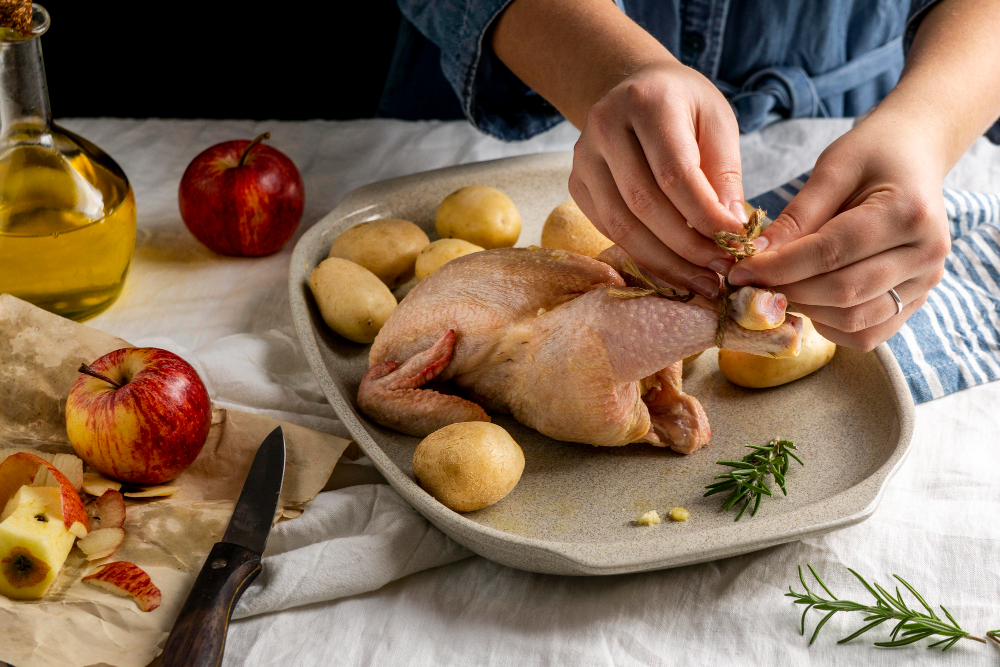
Preparation for roasting involves trussing whole chickens or arranging pieces so that they are not crowded. Crowding the pan leads to steaming rather than roasting, resulting in soggy skin. If cooking multiple pieces, spacing them evenly is crucial. Rubbing the chicken with a mixture of oil, salt, and herbs before placing it in the oven aids in heat conduction and flavor adhesion. Olive oil or melted butter works well, with butter adding a richer flavor profile due to its milk solids, though it has a lower smoke point. For high-temperature roasting, oils with higher smoke points like avocado or grapeseed oil may be preferable to prevent burning.
Monitoring internal temperature is the only reliable way to determine doneness, as visual cues like clear running juices can be misleading. The USDA recommends cooking chicken to an internal temperature of 165°F (74°C) to ensure safety. However, many chefs argue that dark meat (thighs and legs) benefits from being cooked to slightly higher temperatures, around 175°F (79°C), to break down collagen and become more tender. Investing in a high-quality instant-read thermometer is essential for any home cook. Placing the probe into the thickest part of the meat without touching the bone provides an accurate reading. Once the target temperature is reached, the chicken must rest. Resting allows the juices, which have been driven to the center by the heat, to redistribute throughout the meat. Cutting too soon releases these juices onto the cutting board, leaving the meat dry.
Method Two: Pan-Seared Chicken Breasts for Quick Meals
Pan-searing is the go-to technique for boneless, skinless chicken breasts, offering a fast solution for busy weekdays. The challenge with breasts is their low fat content, which makes them prone to drying out if overcooked. The solution lies in controlling the heat and utilizing a two-stage cooking process: searing followed by gentle finishing. Start by pounding the chicken breasts to an even thickness, usually about half an inch. This ensures that the meat cooks uniformly, preventing the thinner ends from becoming tough while the center reaches the safe temperature. A meat mallet or the bottom of a heavy skillet can be used for this purpose.
Heat a heavy-bottomed skillet, such as cast iron or stainless steel, over medium-high heat until a thin layer of oil shimmers. Place the chicken in the pan without moving it to allow a deep golden crust to form via the Maillard reaction. This usually takes about 5 to 7 minutes per side depending on thickness. Once both sides are browned, the heat should be reduced, and a small amount of liquid (such as broth, wine, or water) can be added to the pan. Covering the skillet traps the steam, gently finishing the cooking process without further browning the exterior. This technique, often referred to as pan-roasting, keeps the interior moist while preserving the crispy exterior.
Deglazing the pan after removing the chicken creates an instant sauce that adds immense value to the dish. The browned bits stuck to the bottom of the pan, known as fond, are packed with flavor. Adding a liquid and scraping these bits loose incorporates them into a rich sauce. Finishing the sauce with a knob of cold butter emulsifies the liquid, creating a glossy, velvety texture that coats the chicken beautifully. This method demonstrates how a simple protein can be elevated with minimal effort. For those interested in the mechanics of sautéing and pan sauces, Bon Appétit provides extensive video tutorials and written guides that visualize these techniques effectively.
Method Three: Braising for Tender Dark Meat
Braising is a moist-heat cooking method that combines searing and simmering, making it ideal for tougher cuts like chicken thighs and legs. These cuts contain more connective tissue and fat, which require longer cooking times to break down into gelatin, resulting in succulent, fall-off-the-bone meat. The process begins similarly to pan-searing: the chicken is browned in hot oil to develop flavor and color. Once browned, the chicken is removed, and aromatics such as onions, carrots, and celery are sautéed in the same pot to build a flavor base.
Liquid is then added to the pot, enough to partially submerge the chicken. This liquid can be stock, wine, tomato sauce, or a combination thereof. The pot is covered tightly and transferred to a low oven (around 300°F or 150°C) or left to simmer gently on the stovetop. The low, steady heat allows the collagen in the connective tissues to hydrolyze into gelatin without causing the muscle fibers to contract aggressively and squeeze out moisture. This slow transformation is what gives braised dishes their characteristic richness and tenderness. Unlike roasting or searing, where precision timing is critical, braising offers a wider window of doneness, making it very forgiving for beginners.
Vegetables added to a braise absorb the flavors of the cooking liquid and the rendered chicken fat, becoming integral components of the meal rather than mere sides. Root vegetables like potatoes, parsnips, and carrots hold up well to the long cooking times required for braising. Delicate greens should be added only in the last few minutes to wilt without losing their texture. The resulting dish is often a one-pot meal that balances protein, vegetables, and sauce in a single vessel. This method aligns with traditional cooking wisdom found in resources like Saveur, which often highlights global braising techniques from French coq au vin to Italian pollo alla cacciatora.
Comparative Analysis of Cooking Methods
To assist in selecting the appropriate technique for specific needs, the following table compares the primary methods discussed. Each approach offers distinct advantages regarding time, texture, and equipment requirements.
| Feature | Roasting | Pan-Searing | Braising |
|---|---|---|---|
| Best Cut | Whole bird, bone-in pieces, skin-on | Boneless, skinless breasts | Thighs, legs, bone-in pieces |
| Texture Profile | Crispy skin, firm but juicy meat | Golden crust, tender interior | Fall-off-the-bone, gelatinous richness |
| Cooking Time | Moderate (45–60 mins) | Fast (10–15 mins) | Long (45–90 mins) |
| Active Effort | Low (prep and monitor) | High (attention to heat/timing) | Low (mostly passive simmering) |
| Equipment Needed | Oven, roasting pan, rack | Heavy skillet, lid | Dutch oven or heavy pot with lid |
| Flavor Concentration | Concentrated via evaporation | Intense surface browning | Deep, infused flavors from liquid |
| Forgiveness Level | Moderate | Low (easy to overcook) | High (hard to ruin) |
| Ideal Use Case | Sunday dinners, meal prep | Quick weeknight meals | Comfort food, cold weather dining |
This comparison illustrates that no single method is superior; rather, the choice depends on the cut of chicken available and the desired outcome. Roasting excels in textural contrast, pan-searing wins on speed, and braising delivers unparalleled tenderness for darker meats. Understanding these distinctions allows a cook to adapt recipes based on inventory and time constraints, a hallmark of culinary competence.
Troubleshooting Common Pitfalls
Even with careful adherence to instructions, beginners may encounter issues such as dry meat, pale skin, or bland flavor. Dry chicken is almost always the result of overcooking. Because chicken breasts have little fat, they transition from perfect to dry in a matter of minutes. Relying on a thermometer rather than a timer eliminates this guesswork. If the meat is consistently dry despite correct temperatures, the issue may be the quality of the bird or a lack of resting time. Allowing the meat to rest for at least five to ten minutes after cooking is essential for juice redistribution.
Pale, rubbery skin usually indicates that the oven temperature was too low or the chicken was crowded in the pan. Moisture is the enemy of crispiness; ensuring the skin is dry before cooking and using high heat are the corrective measures. If the skin is browning too quickly before the inside is cooked, tenting the chicken loosely with aluminum foil can protect the exterior while the interior finishes. Blandness often stems from under-seasoning. Chicken requires a generous amount of salt, particularly if it has not been brined. Tasting the seasoning mix before applying it and ensuring salt is distributed evenly across all surfaces can rectify this issue.
Another common error is moving the chicken too frequently in the pan. When searing, the meat needs to stay in contact with the hot surface to form a crust. Constant flipping prevents the Maillard reaction from occurring, leading to steamed rather than seared meat. Patience is a vital ingredient; allowing the chicken to release naturally from the pan when the crust is formed ensures a clean separation and better texture. For more advanced troubleshooting tips, consulting culinary institutes’ online resources, such as those provided by the Culinary Institute of America, can offer deeper insights into the physics of cooking.
Frequently Asked Questions
What is the safest internal temperature for cooking chicken?
The USDA mandates that all poultry must reach an internal temperature of 165°F (74°C) to be considered safe for consumption. This temperature ensures that harmful bacteria like Salmonella and Campylobacter are destroyed instantly. While some chefs prefer to cook dark meat to higher temperatures for texture, 165°F is the absolute minimum safety threshold for all parts of the chicken.
Can I cook chicken directly from frozen?
Yes, it is safe to cook chicken from frozen, but the cooking time will increase by approximately 50%. It is crucial to ensure the chicken reaches the safe internal temperature of 165°F throughout. However, cooking from frozen makes it difficult to achieve a good sear or crispy skin, and seasoning penetration is limited. Thawing in the refrigerator beforehand is generally recommended for better quality results.
Why does my chicken stick to the pan when searing?
Sticking usually occurs because the pan was not hot enough, the oil was not hot enough, or the chicken was moved too soon. When protein hits a hot surface, it bonds temporarily; as the Maillard reaction completes and a crust forms, the meat naturally releases. Using a heavy-bottomed pan and ensuring adequate preheating time prevents sticking. Additionally, patting the chicken dry removes surface moisture that can cause sticking and steaming.
How long can leftover cooked chicken be stored in the refrigerator?
According to food safety guidelines, cooked chicken can be safely stored in the refrigerator for 3 to 4 days. It should be placed in shallow, airtight containers to cool quickly and prevent bacterial growth. If the chicken needs to be kept longer, it should be frozen, where it can remain safe indefinitely, though quality is best within 2 to 6 months.
Is it necessary to wash chicken before cooking?
No, washing raw chicken is not recommended and can be dangerous. Washing spreads bacteria present on the surface of the chicken to other areas of the kitchen through water droplets (splashing). Cooking the chicken to the proper internal temperature kills any bacteria present, making washing unnecessary and counterproductive to kitchen hygiene.
What is the difference between white meat and dark meat?
White meat, found in the breast and wings, contains less fat and myoglobin, resulting in a lighter color and leaner texture. It cooks faster but dries out easily. Dark meat, found in the thighs and legs, has higher fat content and more myoglobin, giving it a richer flavor and darker color. It is more forgiving during cooking and remains moist even at higher internal temperatures due to its connective tissue content.
Can I reuse marinade that has touched raw chicken?
Marinade that has been in contact with raw chicken must not be reused as a sauce unless it is boiled first. Boiling the marinade for at least one minute kills any bacteria transferred from the raw meat. Alternatively, set aside a portion of the marinade before adding the chicken if it is intended to be used as a finishing sauce.
How do I know if chicken has gone bad?
Spoiled chicken typically exhibits a sour or ammonia-like odor, a slimy texture, and a change in color from pink to gray or yellow. If any of these signs are present, the chicken should be discarded immediately. When in doubt, it is safer to throw the meat away than to risk foodborne illness.
Conclusion
Mastering the art of cooking chicken is a foundational skill that opens the door to countless culinary possibilities. By understanding the distinct characteristics of different cuts and applying the appropriate techniques—whether it be the dry heat of roasting, the rapid sear of the skillet, or the gentle simmer of braising—any beginner can produce meals that are both delicious and nutritious. The emphasis on food safety, proper seasoning, and temperature control ensures that these dishes are not only tasty but also wholesome. The journey from raw ingredient to finished plate is governed by scientific principles that, once understood, become intuitive tools in the home cook’s arsenal.
As confidence grows, experimentation with herbs, spices, and global flavor profiles becomes the next logical step. The methods outlined here serve as a robust framework upon which infinite variations can be built. Whether preparing a quick weeknight dinner or a leisurely weekend feast, the ability to handle chicken with competence brings a sense of accomplishment and self-sufficiency to the kitchen. With patience, attention to detail, and reliance on credible techniques, the goal of creating exceptional homemade chicken dishes is entirely attainable for everyone. The kitchen is a place of learning and creation, and with these fundamentals in place, every meal becomes an opportunity to refine one’s craft.